§ LEGENDS · 2 MIN READ
The Man Who Made the Street Wait Its Turn
Garrett Morgan saw two crashes coming, one on the road and one underground, and invented the answer to both. A sixth-grade education, and a patent General Electric paid 40,000 dollars for.

By Culture
THE SHORT VERSION
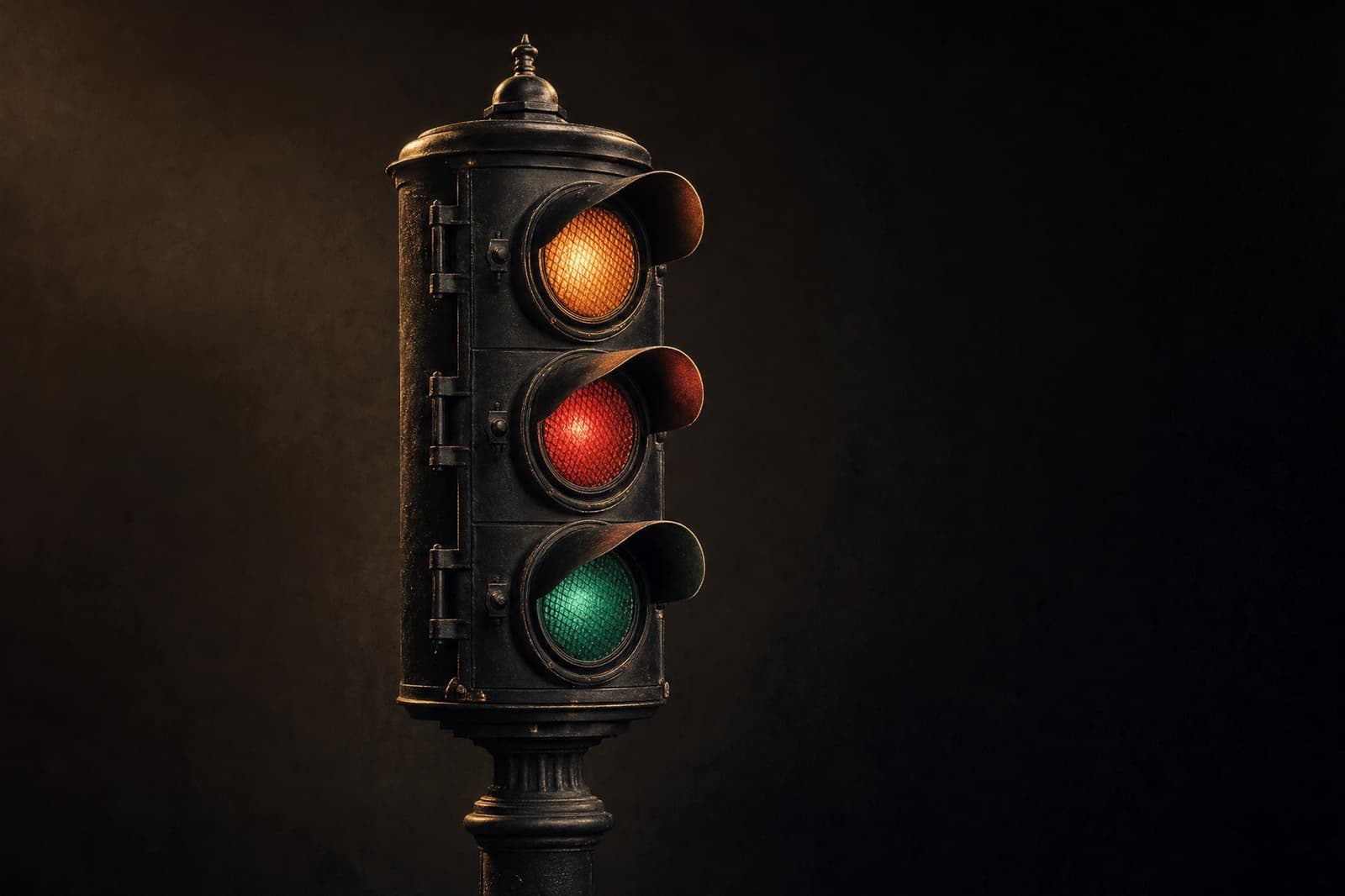
Garrett Morgan invented an early three-position traffic signal that added a warning interval between stop and go, and sold the patent to General Electric for 40,000 dollars in 1923. He also patented a safety hood in 1914, an early gas mask, and used it himself to rescue workers trapped in a collapsed tunnel under Lake Erie in 1916.
Every time a yellow light gives you a second to slow down instead of slamming your brakes, you are living inside Garrett Morgan's idea.
Morgan was born in Kentucky in 1877, left school after the sixth grade, and moved north to Cleveland, where he fixed sewing machines. That job taught him how machines think. He never stopped taking things apart after that.
The Hood That Went Into the Smoke
In 1914 he patented a safety hood, a device that let a person breathe cleaner air near the ground while smoke rose above. In 1916, a tunnel being dug under Lake Erie exploded, trapping workers in gas and darkness. Morgan and his brother put on the hoods and went in themselves. They carried men out.
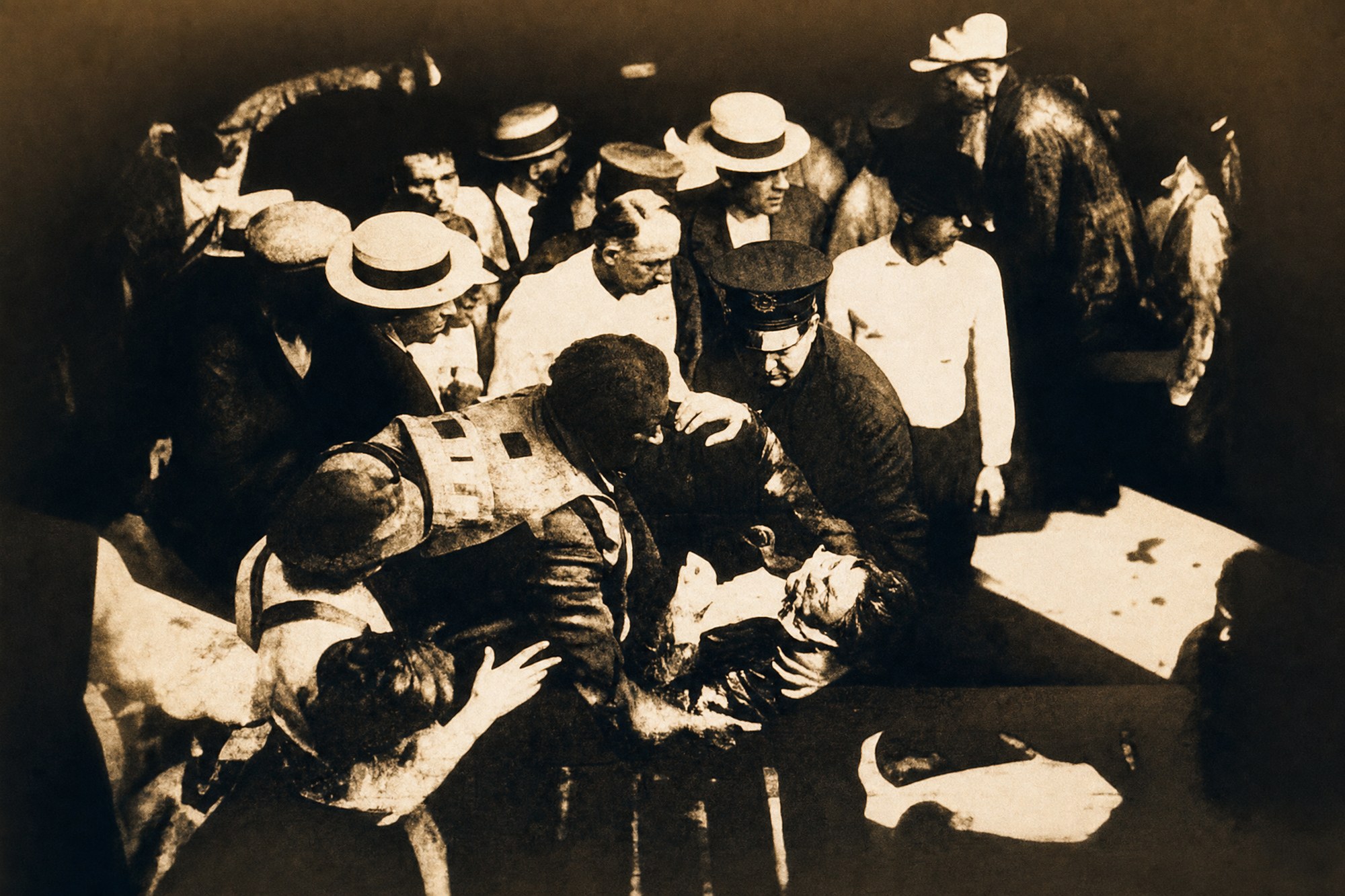
That detail is worth sitting with. He did not send the invention. He wore it, and walked into the thing it was built for.
The Light That Waits
Morgan also drove one of the first cars in Cleveland, and he watched an accident at an intersection that stuck with him. Traffic signals then had only two commands: stop and go. Nothing warned you that the change was coming.
So he patented a three-position signal, stop, go, and an all-hold position in between that cleared the intersection before traffic switched. In 1923, General Electric bought the patent for 40,000 dollars. That in-between moment became the yellow light the whole world drives on.
“He watched the intersection fail, and decided it just hadn't been finished yet.”
The Habit, Not the Genius
That is the inventor's habit of mind: nothing around you is finished. It is all waiting for somebody to look closer. Morgan had a sixth-grade education and a repair job, which is to say he had the two things that actually produce inventions, a close look at how something breaks and the nerve to say it could be built better.
It is the same habit that put Mark Dean's name on three of the nine patents behind the first IBM PC, and the same one that had Kunle Olukotun arguing a chip should have many brains while the whole industry told him he was wrong.
- Did Garrett Morgan invent the traffic light?
- Garrett Morgan invented and patented an early three-position traffic signal that added a warning step between stop and go. Signals existed before his, but that in-between position became the yellow light. General Electric bought the patent for 40,000 dollars in 1923.
- Who was Garrett Morgan?
- Garrett Morgan was an inventor born in Kentucky in 1877 who moved to Cleveland and fixed sewing machines. He patented a safety hood in 1914 and a three-position traffic signal later.
- What was Garrett Morgan's safety hood?
- Garrett Morgan's safety hood was an early gas mask, patented in 1914, that let a wearer breathe cleaner air near the ground while smoke rose above. In 1916 Morgan and his brother wore the hoods into a collapsed tunnel under Lake Erie and carried trapped workers out.
- How much did General Electric pay for Garrett Morgan's traffic signal?
- General Electric bought Garrett Morgan's traffic signal patent for 40,000 dollars in 1923.
- Why did Garrett Morgan invent a new traffic signal?
- Garrett Morgan drove one of the first cars in Cleveland and saw an accident at an intersection. Signals then only said stop and go, with no warning that a change was coming, so he added a hold position that cleared the intersection first.
- How much education did Garrett Morgan have?
- Garrett Morgan left school after the sixth grade. He learned mechanics fixing sewing machines in Cleveland and kept filing patents for the rest of his life.