§ TECH · 2 MIN READ
His Name Is Inside Every PC
Mark Dean holds three of the nine original patents behind IBM's first personal computer, co-invented the handshake that lets you plug anything in, then led the team that broke the gigahertz barrier.

By Culture
THE SHORT VERSION
Mark Dean is an engineer from Jefferson City, Tennessee who holds three of the nine original patents behind IBM's first personal computer and co-created the bus, the internal system that lets printers, monitors and keyboards connect to a computer. In 1999 he led the team that built the first gigahertz processor chip, and he was IBM's first Black IBM Fellow.
Look at any computer. The screen plugs in. The keyboard plugs in. The printer plugs in, and everything understands everything else. That handshake had to be invented, and one of its inventors is a Black engineer from Jefferson City, Tennessee named Mark Dean.
The Machine on Every Desk
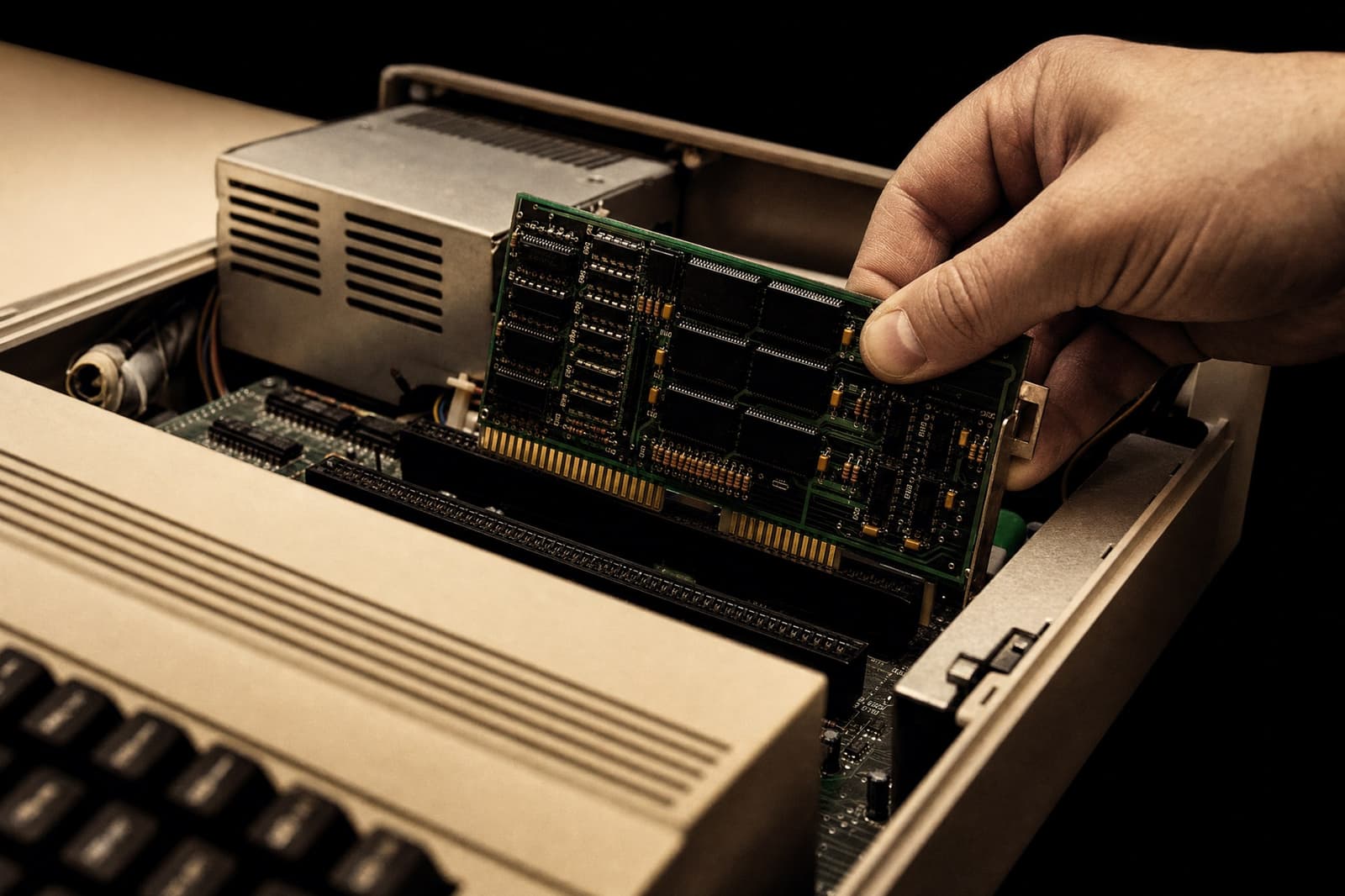
Dean joined IBM in 1980, right as the company raced to build its first personal computer. Of the nine original patents that described that machine, three carry his name. With a colleague he co-created the bus, the shared highway inside the computer that lets add-on devices connect and communicate. Plug something in and it just works: that idea, that early, is his fingerprints.
It is worth understanding why that mattered so much. Before a standard bus, every add-on was a custom job, which meant one company controlled what you were allowed to attach. A published standard opened the machine, and an open machine is the reason a teenager in a bedroom could build hardware for it. The industry we have came out of that decision.
Faster Than Anyone Had Gone
He did not stop at the beginning of the PC era, he pushed its ceiling too. In 1999, Dean led the team that produced the first processor chip to run at a gigahertz: a billion cycles every second, a speed that had been the industry's horizon for years.
IBM made him its first Black IBM Fellow, the company's highest technical honor.
“The tools you use every day were built by people, and some of those people looked like you.”
Why to Tell a Kid This One
That is the whole reason to tell this story to a kid with a laptop: the machine is not magic from nowhere. It is design, by designers, and the seat is open. It is the same seat Katherine Johnson took at NASA by asking whether there was actually a law against it, and the same one Kunle Olukotun took at Stanford by insisting a chip should have many brains while everybody told him otherwise.
The practical version is not complicated. Take the free class. Then keep the receipts, which in this field means patents, commits and your name on the design doc, because that is how a person becomes a line in the history instead of a rumor in it.
- What did Mark Dean invent?
- Mark Dean holds three of the nine original patents behind IBM's first personal computer and co-created the bus, the shared highway inside a computer that lets printers, monitors and keyboards plug in and talk to it. In 1999 he also led the team that built the first gigahertz processor chip.
- Where is Mark Dean from?
- Mark Dean is an engineer from Jefferson City, Tennessee. He joined IBM in 1980, right as the company raced to build its first personal computer.
- What was the first gigahertz chip?
- In 1999 Mark Dean led the IBM team that made the first processor chip to run at a gigahertz, a billion cycles every second, a speed the industry had chased for years.
- What is an IBM Fellow?
- IBM Fellow is IBM's highest technical honor, given to a small number of engineers and scientists. Mark Dean was the first Black engineer to receive it.
- Why did a standard computer bus matter so much?
- Before a standard bus, every add-on device was a custom job, so one company controlled what you could attach. A published standard opened the computer to anybody who wanted to build for it, which is why an independent hardware industry could exist.