§ THE STUDIO · 2 MIN READ
Who Pays for the Wall
Most public art in Los Angeles is paid for by a quiet rule: one percent of construction. Federal arts money got a lot less dependable in 2025. Here is where the money for murals, sculptures and community art actually comes from, and how artists get to it.

By Culture
THE SHORT VERSION
In Los Angeles, most public art is funded by percent-for-art rules: the city sets aside 1 percent of the cost of its construction projects for art, and private developments worth $500,000 or more pay an Arts Development Fee of 1 percent of permit valuation or a square-footage fee, whichever is lower. Federal funding became less reliable after the National Endowment for the Arts withdrew grants from hundreds of organizations in May 2025, including at least 16 in Los Angeles.
When you drive past a sculpture outside a new library or a mosaic at a train station, somebody paid for it. In Los Angeles, the answer to who is usually not a patron or a grant. It is a construction budget.
The City of Los Angeles runs two percent-for-art programs through its Department of Cultural Affairs.
On city projects. Under the Public Works Improvements Arts Program, the city sets aside 1 percent of the total cost of its own construction, improvement and renovation projects for public art. A new fire station, a park building, a library branch: one cent of every dollar is for art.
On private projects. Under the Arts Development Fee program, owners of private developments valued at $500,000 or more pay an arts fee, set at 1 percent of the building permit valuation or a fee per square foot, whichever is lower. Developers can often satisfy it by commissioning art on site instead of paying into the fund.
The department's Public Art Division also runs a murals program and keeps the city's art collection. Other agencies in the region, including the county and the transit authority, run their own percent-for-art programs on their own projects.
“Every new building in this city has a line in its budget for art. Most artists do not know the line exists.”
For decades, the National Endowment for the Arts was the steady federal partner for arts nonprofits. In May 2025, after the administration proposed eliminating the agency in its 2026 budget request, the NEA withdrew grants it had already offered to organizations across the country. More than 330 organizations reported losing funding, according to reporting at the time.
At least 16 Los Angeles nonprofits were among them, including theatres such as Cornerstone Theater Company, which lost a $40,000 grant offer, and Boston Court Pasadena and Deaf West Theatre. Community arts groups that run mural programs and youth workshops depend on the same kinds of grants.
The practical result: local money, from percent-for-art programs, county arts grants and private foundations, now carries more of the weight.
Public art does not run through galleries. It runs through calls for artists, and anybody can answer one.
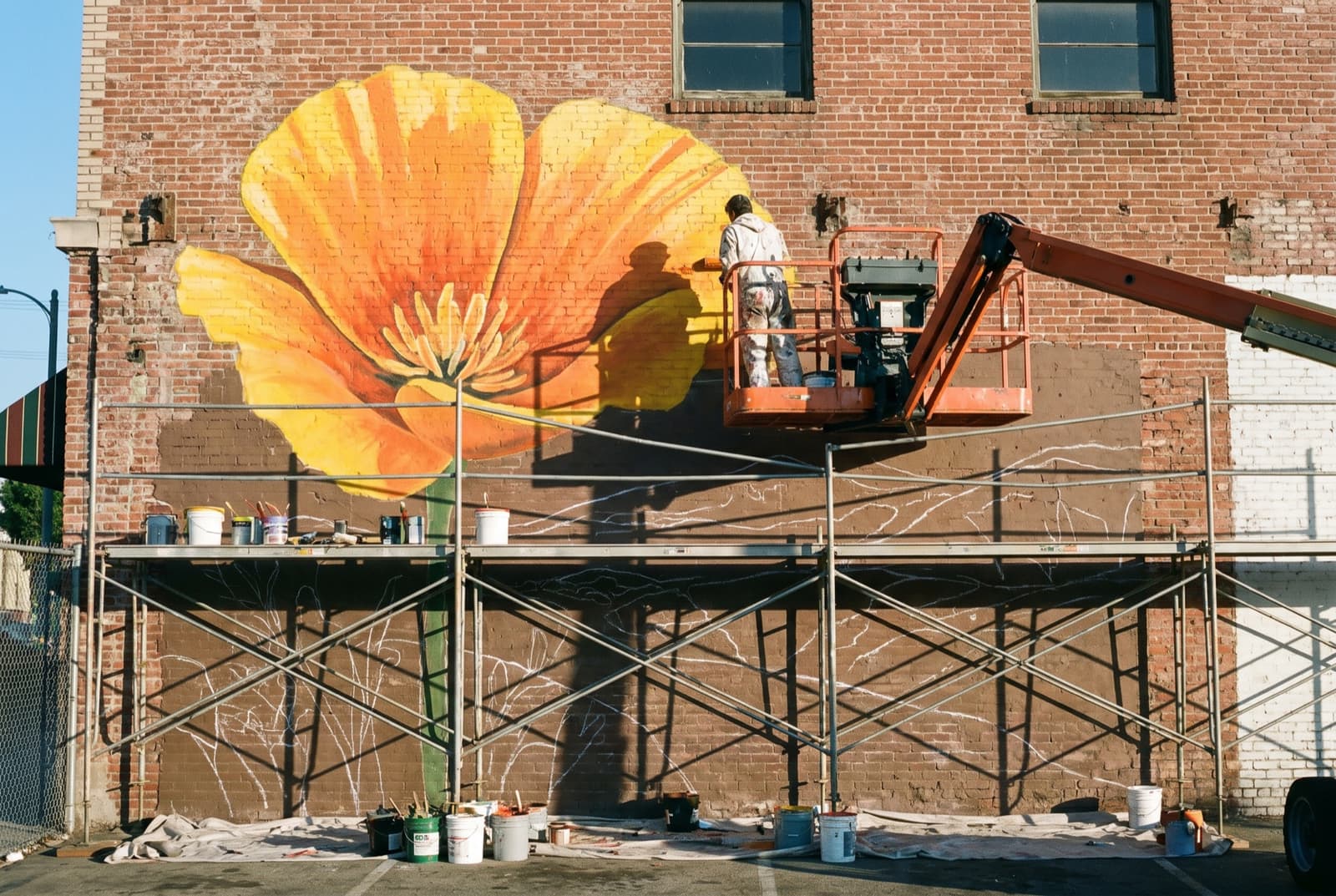
The Murals room collects walls from Compton to Long Beach. If you painted one, add it. If you are looking for one, take the drive.
- How does Los Angeles pay for public art?
- Mainly through percent-for-art rules run by the Department of Cultural Affairs: 1 percent of city construction costs, and an Arts Development Fee on private projects worth $500,000 or more.
- What happened to NEA grants in 2025?
- In May 2025 the National Endowment for the Arts withdrew previously offered grants from hundreds of organizations nationwide; at least 16 Los Angeles nonprofits reported losing funding.
- How does an artist get a public art commission?
- Watch the calls for artists posted by the city, county and transit agencies, build a portfolio of work at scale, and apply for prequalified artist pools, which many agencies draw from.