§ THE STUDIO · 3 MIN READ
How a Wall Actually Gets Painted
Every legal mural starts with the same unglamorous sequence: an owner, a permit, a contract and a primer. Here is the order, so the first one does not become a code violation.

By Culture
THE SHORT VERSION
A legal mural requires written permission from the property owner rather than the tenant, a check on local permit and sign-ordinance rules since some cities classify murals as signage, and a written contract covering payment, timeline and maintenance. Federal law under VARA can also give an artist rights over the destruction of a mural, which is worth addressing explicitly in the agreement.
The first mural is usually the one that teaches somebody about municipal code the hard way. It does not have to be.
Written permission from the property owner. Not the business renting the space, which is the single most common mistake. A barber who has leased a shop for fifteen years cannot authorise painting the building, and a mural painted on a tenant's say-so can be ordered removed at the artist's cost.
Get the owner's name off the county assessor's records if you do not know it. It is public and it takes five minutes.
Put it in writing. An email saying yes is enough to start, and a signed one-page agreement is better.
This is where cities differ enormously, and the deciding factor is usually whether the mural is classified as art or as signage.
If it contains a business name, a logo, or anything advertising the business on the wall, many cities treat it as a sign, which triggers a completely different and stricter permitting process. A mural with no commercial content is frequently exempt, or handled through a light arts review.
Call the planning department and ask two questions: does this require a permit, and is it treated as a sign if it names the business? Get the answer and write down who told you.
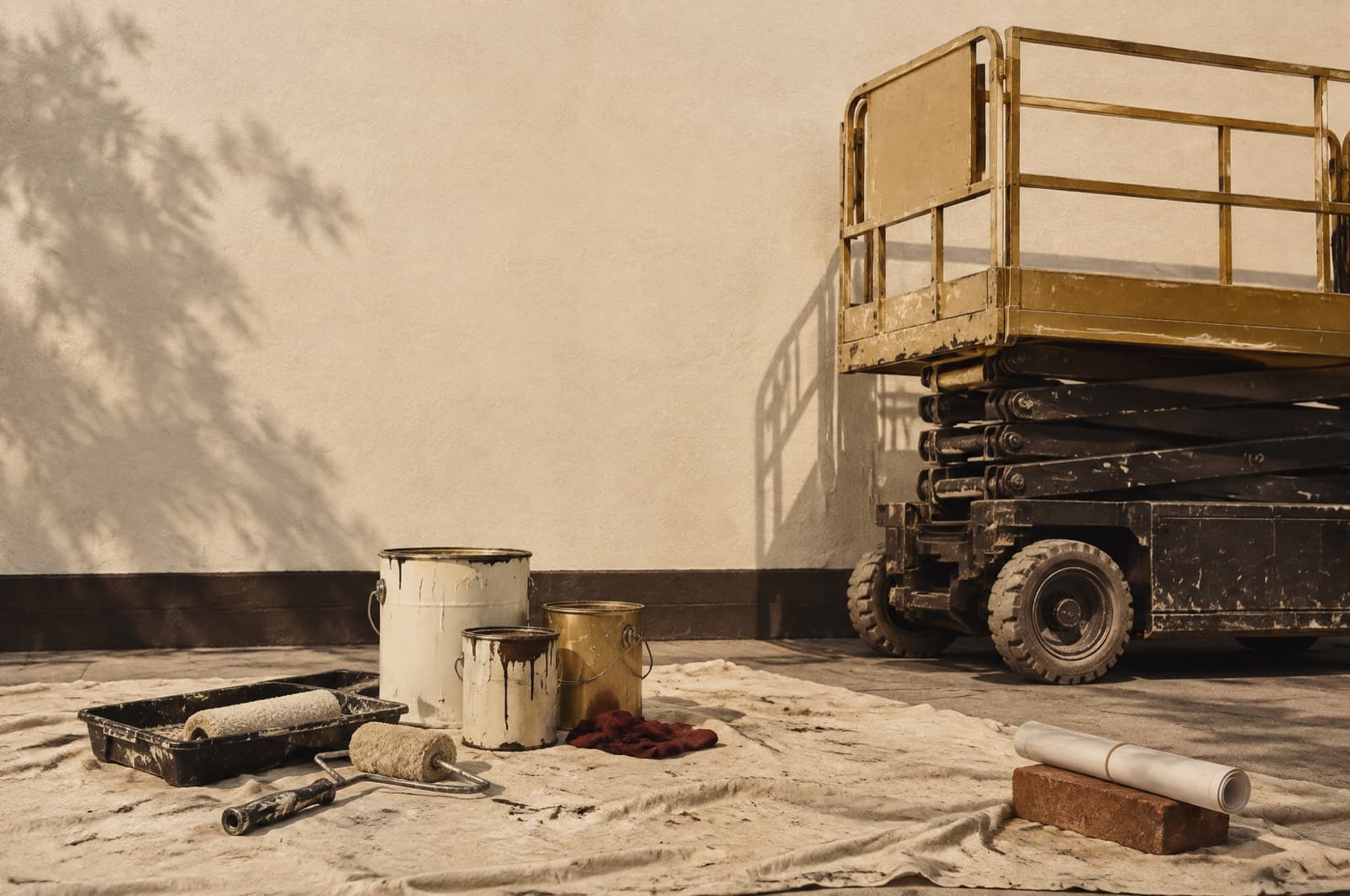
Also ask about historic districts, which have their own rules and their own review boards, and about height, because anything requiring a lift usually brings its own requirements.
Even for a small job, even for a friend. Cover:
The Visual Artists Rights Act is federal law that can give an artist rights concerning the destruction or mutilation of a work of recognised stature, including in some circumstances murals attached to buildings.
It is genuinely complicated, and agreements often ask artists to waive it. The practical advice is not to pretend it does not exist: address it explicitly, and if a contract asks you to waive VARA rights, understand that you are being asked to give up the ability to object when the wall is painted over.
“Nobody plans for the day the building sells. The contract is where that day gets decided.”
Pressure wash it. Prime it properly, because paint on an unprimed or previously sealed wall fails within a season. Photograph the wall before you touch it, which protects you if somebody later claims you damaged something. Use exterior-grade paint and finish with a UV-resistant anti-graffiti clear coat where the budget allows.
Mural Studies shows what happens between the sketch and the wall, and twenty-two walls on one boulevard began with exactly this sequence, several of them donated before anybody was paying. The public art money is real once you are on the mailing lists.
- Who can give permission for a mural?
- The property owner, in writing. A business renting the building cannot authorise painting its wall, and a mural painted on a tenant's permission can be ordered removed at the artist's expense. Owner details are public through the county assessor.
- Do I need a permit to paint a mural?
- It depends on the city and usually on whether the work is classified as art or signage. Including a business name or logo often triggers stricter sign permitting, while non-commercial murals are frequently exempt or handled through light arts review. Call the planning department and record who told you.
- What is VARA?
- The Visual Artists Rights Act, federal law that can give artists rights concerning destruction or mutilation of works of recognised stature, including some murals. Contracts often ask artists to waive it, which means giving up the ability to object when the wall is painted over.
- How do I prepare a wall for a mural?
- Pressure wash it, prime it properly since paint on unprimed or previously sealed surfaces fails within a season, photograph the wall before starting to protect against later damage claims, and use exterior-grade paint with a UV-resistant anti-graffiti clear coat where budget allows.