§ FEATURE · THE STUDIO · 2 MIN READ
The Momentum Is Real. So Are the Numbers Under It.
Black American artists are on museum walls and auction covers like never before. The most complete count of the market says the share is still tiny. Both things are true, and knowing the numbers is how the momentum lasts.

By Culture
THE SHORT VERSION
The 2022 Burns Halperin Report found that work by Black American artists accounted for 1.9 percent of global auction sales from 2008 to mid-2022 (about $3.6 billion of $187 billion), 2.2 percent of acquisitions and 6.3 percent of exhibitions at 31 U.S. museums from 2008 to 2020, and work by Black American women just 0.5 percent of acquisitions.
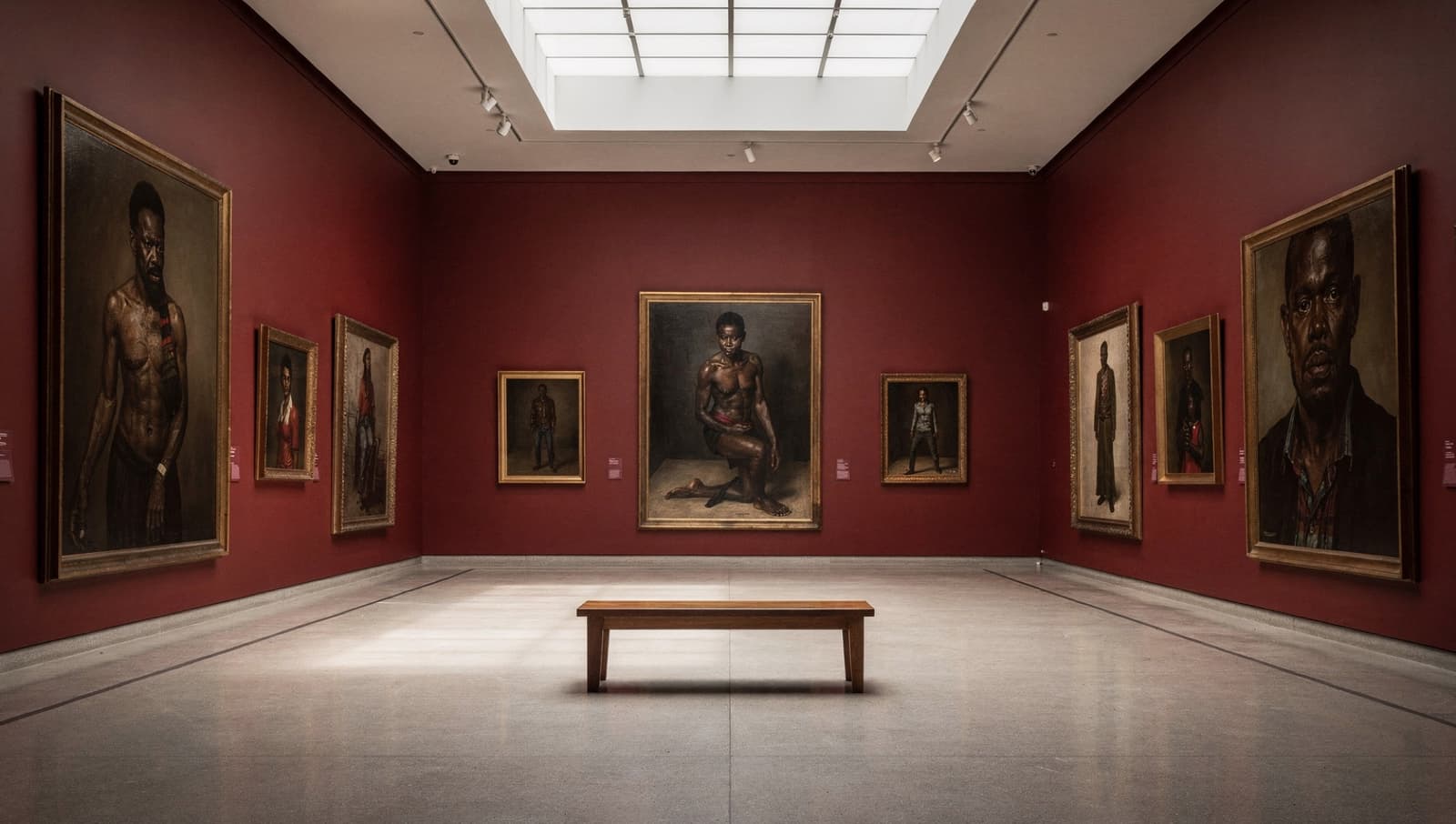
If you follow art, the last decade has felt like a turn. Black painters on the covers of auction catalogues. Retrospectives at the biggest museums in the country. Portraits of Black Americans hung in rooms that for a century hung almost nobody who looked like them.
That turn is real. And the most careful count of the market says it is still small. Keeping both of those facts in your head at once is the whole job.
The Count
In December 2022, the researchers Charlotte Burns and Julia Halperin published what became known as the Burns Halperin Report. It was a database of hundreds of thousands of records: every acquisition and exhibition at 31 American museums from 2008 to 2020, and global auction results from 2008 to the middle of 2022. They counted three groups: women artists, Black American artists, and Black American women.
The findings for Black American artists:
And for Black American women: 0.5 percent of museum acquisitions, fewer than 2,000 works, in a country where Black women are about 6.6 percent of the population.
Why It Feels Bigger
The percentage increases over that period were large. That is the trap the report named directly: when you start from almost nothing, growth looks enormous. A handful of record-breaking sales by a handful of artists can make a headline every month without moving the overall share very far.
Exhibitions ran ahead of acquisitions, too. Museums showed work by Black artists more often than they bought it. A show comes down after three months. An acquisition stays in the collection and in the record forever. The difference matters for which artists the next generation of curators will even know to look for.
“A show is a visit. An acquisition is a residence.”
What the Momentum Needs
The report was not written to discourage anybody, and it should not. It was written so that the people who want the change can measure it. Three things follow from the numbers.
Buy, do not just attend. Museums respond to collectors and donors. The fastest way a work enters a collection is that somebody gives it or pays for it. Black collectors buying Black artists early, then lending and donating, is how a 2 percent share becomes a 10 percent share.
Watch the women. The gap is widest for Black women artists. A collector starting now has the clearest view of where the market has not yet looked.
Count locally. Every city has a version of this number for its own galleries, grants and public walls. Ask for it. Institutions that are counted tend to change.
On Knect
The Arts wing exists for the artists in that 2 percent and the ones who should be in it. The Artists room, the new shows in Exhibits and the work for sale on The Wall are a small place to start counting differently.
- What is the Burns Halperin Report?
- The Burns Halperin Report is a data study by Charlotte Burns and Julia Halperin, published in December 2022. It counted acquisitions and exhibitions at 31 U.S. museums from 2008 to 2020 and global auction sales from 2008 to mid-2022 for women artists and Black American artists.
- What share of auction sales went to Black American artists?
- Black American artists made up 1.9 percent of global auction sales between 2008 and mid-2022, about $3.6 billion of roughly $187 billion, according to the Burns Halperin Report.
- How often do museums acquire work by Black American artists?
- In the Burns Halperin Report, work by Black American artists was 2.2 percent of acquisitions at 31 U.S. museums from 2008 to 2020, about 7,500 objects, and 0.5 percent for Black American women.
- Why does the Black art market feel bigger than the numbers say?
- When you start from almost nothing, growth looks huge. A handful of record sales by a handful of artists can make headlines every month without moving the overall share much, which is the trap the Burns Halperin Report named.
- Why does a museum buying art matter more than showing it?
- A show comes down after a few months, while an acquisition stays in the collection and in the record for good. Museums showed work by Black American artists, 6.3 percent of exhibitions, far more often than they bought it.
- How can collectors help Black artists get into museums?
- Buy, do not just attend. Museums respond to collectors and donors, and Black collectors buying Black artists early, then lending and donating the work, is how a 2 percent share grows. The widest gap, and the clearest opening, is with Black women artists.