§ THE STUDIO · 2 MIN READ
Somebody Decided What You See
A curator chooses which works hang, in what order, next to what, with which wall text. Those decisions are invisible by design and they shape the argument a room makes about who matters.

By Culture
THE SHORT VERSION
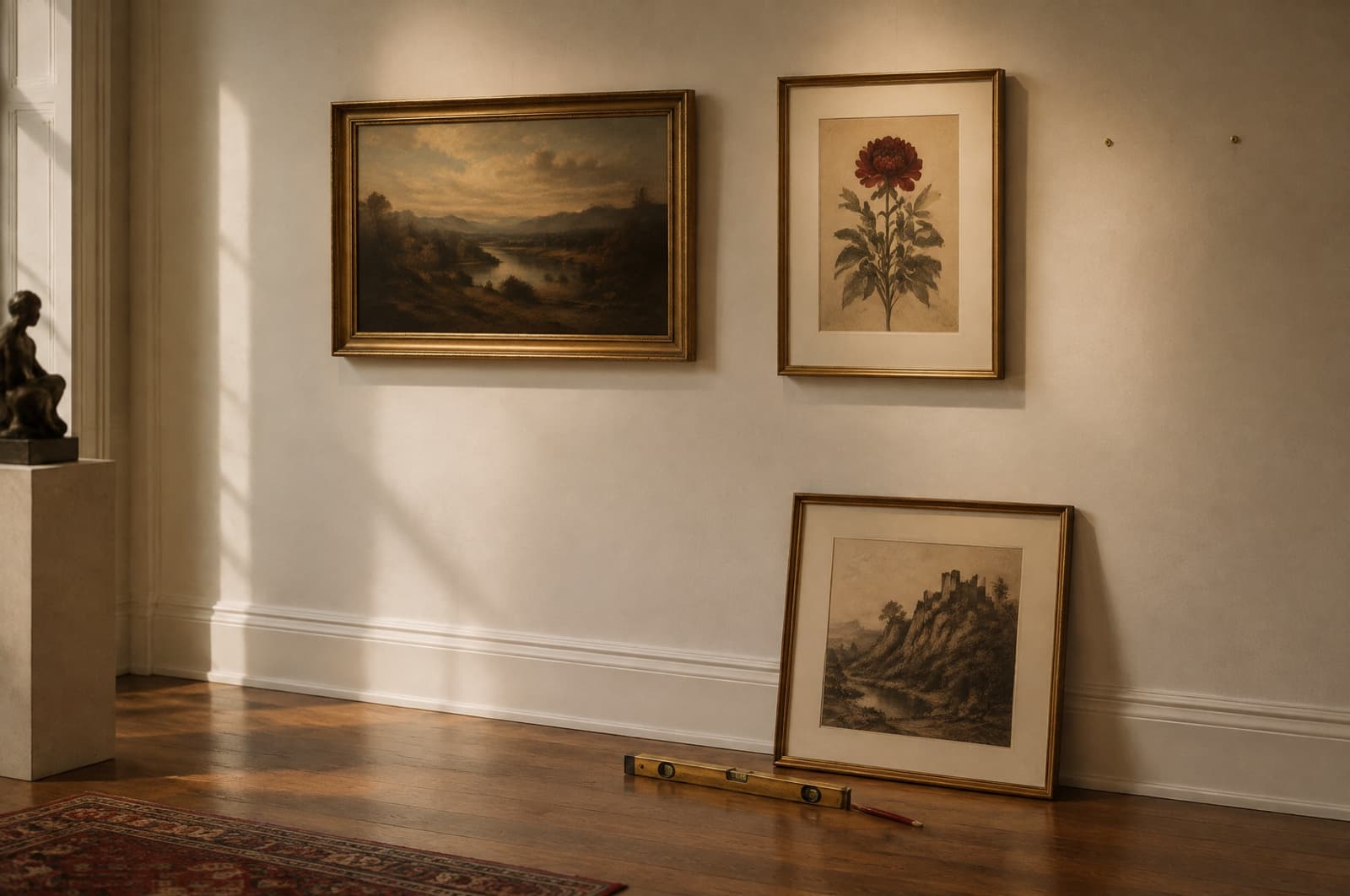
A curator selects which works appear in an exhibition, determines their sequence and adjacency, and writes or commissions the wall text that frames them. Those choices are largely invisible to visitors but determine what argument a room makes, including whose work is treated as central and whose requires explanation.
Walk into an exhibition and the work appears simply to be there, as though a room of paintings were a natural fact. It is not. Every element was chosen, and the choices are the argument.
Selection. Which works are in and which are not. The most consequential decision and the least visible, because you cannot see what was excluded.
Sequence. What you encounter first, second, last. A first room sets the terms you read everything else through, and the final room is what you leave carrying.
Adjacency. What hangs next to what. Placing an artist beside a canonical figure argues they belong in that conversation. Placing the same artist in a side room labelled by identity rather than by movement argues something very different.
Wall text. What gets explained, in what tone, and what is assumed to need no explanation at all.
“The work is what the artist made. The exhibition is what somebody decided the work means together.”
Because the wing attached to this magazine makes its own choices, and they should be legible.
Proud Origins uses quotes as wall text rather than curator notes, which is a decision that nobody in the room is being explained by somebody else. Black Compton hangs donated family portraits at the scale usually reserved for the already-famous, which is an argument about who deserves that treatment. Mural Studies shows the sketches next to the finished panels, which asserts that the process is the interesting part.
And Amy Sherald pulled an entire show rather than let one painting carry a contextualising video. That was a fight about wall text, and it was worth a whole exhibition to her because wall text is not decoration. It is the frame around the frame.
Start small and local. Curate a show of three artists in a café, a church hall, a barber shop. Write the wall text. Hang it in an order and defend the order.
You will learn more in one afternoon of deciding what goes next to what than in any amount of reading, and the artists working near you are far more available than people assume.
- What does a curator do?
- Selects which works appear in an exhibition, decides their sequence and what hangs next to what, and writes or commissions the wall text. Those four decisions determine what argument the room makes.
- How can I read an exhibition critically?
- Notice who gets explained and how: wall text describing one artist's formal qualities and another's biography treats them differently. Check adjacencies, read credit lines to see who owns and lent the work, ask what is absent, and look at acquisition dates.
- Why does wall text matter so much?
- Because it frames how a work is read before a viewer forms their own response. It was significant enough that Amy Sherald withdrew an entire museum survey rather than allow a contextualising video to be placed beside one painting.