§ THE TEA · 2 MIN READ
The Cookout Has Rules and You Know Them
Nobody wrote them down and everybody follows them. A light and serious look at the unwritten constitution of the function, and why a culture that codifies nothing still agrees on everything.

By Culture
THE SHORT VERSION
The customs governing a cookout, including who is permitted to handle the grill, what an invited guest brings, the role of elders and the sequencing of food and music, are transmitted entirely orally and observed with remarkable consistency across the United States. That consistency is a demonstration of how oral tradition preserves shared standards without documentation.
There is no manual. No committee ratified anything. And yet a cookout in Compton, Houston, Detroit and Atlanta will run on the same constitution, and everybody present will know when it has been violated.
That is worth looking at for a minute, in the friendliest possible way.
Not a chore. An office, with a holder, and the holder was not self-appointed. Somebody was given it, usually years ago, and there is a line of succession that everyone understands and nobody has stated.
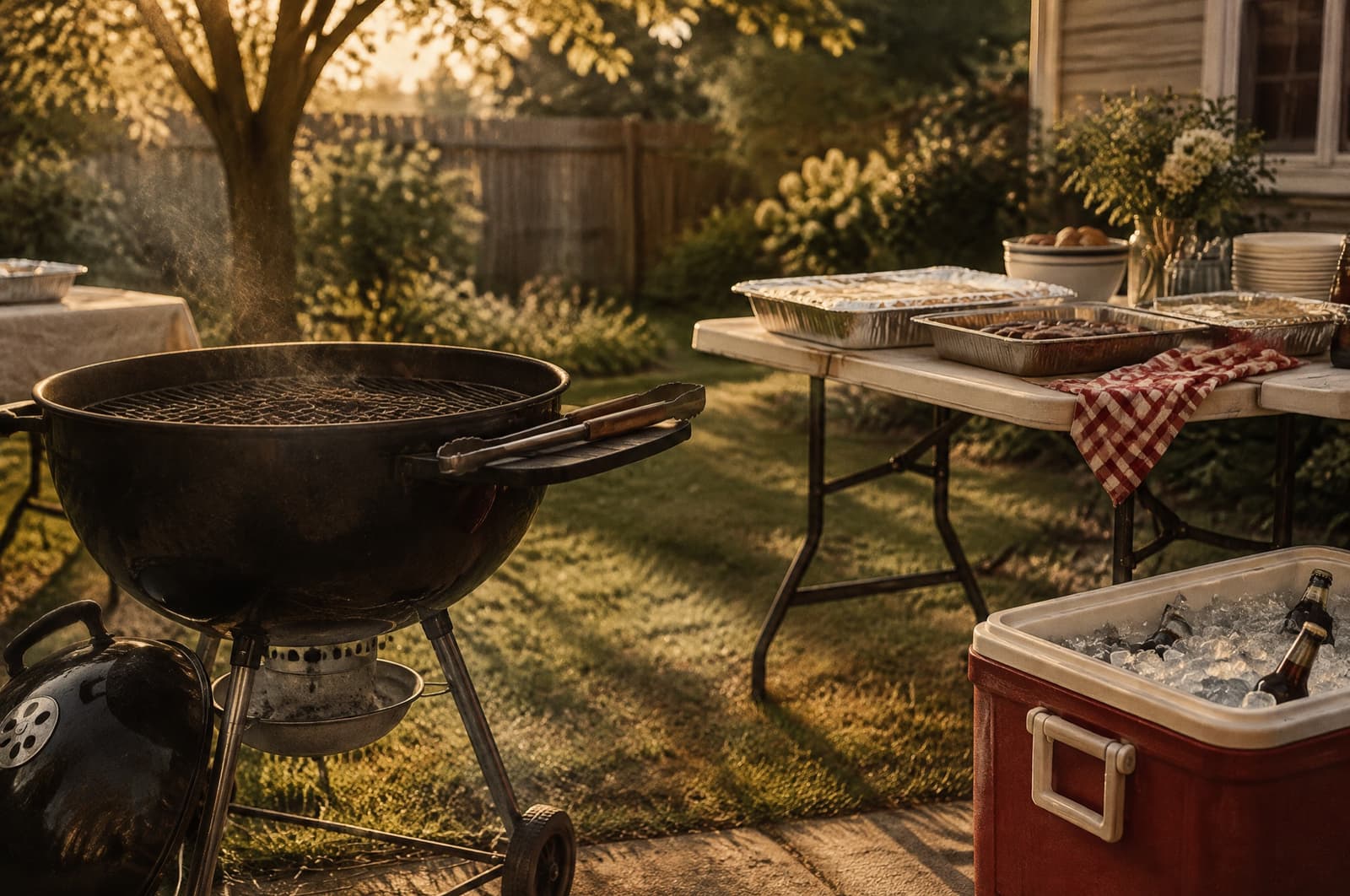
You may be invited to assist. You may be handed the tongs, which is a ceremony and not a break. What you may not do is approach with opinions. A man who wanders over to suggest the coals are not ready has picked a fight with an institution.
The first time is forgiven, quietly, and remembered. The second time you have been assigned an identity you will spend three summers escaping.
The safe contributions are ice, drinks, cups and foil, because they are always short and nobody can criticise them. The unsafe contribution is a dish in a category already spoken for by somebody's aunt, brought without consultation. That is not generosity. That is a challenge, and it will be understood as one.
Elders eat first. Not a preference. The children get fed early and sent outside. The plate is made for whoever is working the grill and it is brought to them, because they do not leave the post.
And somebody makes a plate to go for a person who could not come. That is the part of the whole arrangement that says the most, and it is done without discussion.
“Nobody has ever read these rules. Nobody has ever broken one by accident.”
There is a sequence and it is universal. The arrival hours, where the music is background and conversational. Then the shift that pulls the older heads in, when somebody who has not danced in a year gets up. Then, later, the part that belongs to the younger ones, when the aunts are seated and commenting.
And at some point, two rows form. Which has been happening since Don Cornelius put it on television with 400 dollars, and which happened at cookouts before he did, and which will happen this weekend somewhere near you whether or not anybody plans it.
A culture with no written code, no enforcement and enormous geographic spread, sustaining a detailed shared standard across generations. Oral tradition turns out to hold better than documentation, because a written rule can be looked up and argued with, while a rule you absorbed at nine from the way your grandmother looked at somebody is simply how the world is.
The room where this city keeps that record is built from quotes rather than curator notes for exactly that reason, and the family portraits on the wall got there because somebody kept them.
Bring ice. Speak to the elders when you walk in. Make somebody a plate.
- What should you bring to a cookout?
- Ice, drinks, cups or foil are always safe, because they run short and nobody can fault them. Bringing a dish in a category already claimed by a family member, without checking first, is the risky move.
- Why is the grill treated as such a serious position?
- Because it functions as an office rather than a task. The person holding it was given it, there is an understood line of succession, and offering unsolicited advice about the coals is read as a challenge to an institution.
- Why do unwritten rules survive so well?
- Because a written rule can be looked up and argued with, while a rule absorbed in childhood through how adults reacted is experienced as simply how things are. Oral transmission produces more consistent adherence across distance and generations than documentation does.