§ THE RECORD · 3 MIN READ
The Go Bag Is Not Paranoia
Fire, quake, blackout, evacuation. Los Angeles does all four. Being ready is a Saturday afternoon and about forty dollars, and the part almost everybody skips is the documents.

By Culture
THE SHORT VERSION
An emergency go bag for a Los Angeles household should cover water, medication, cash in small bills, a battery power bank, copies of identity and insurance documents, and a written out-of-state contact number. The most commonly skipped item is documentation, which is what determines how quickly a household can access aid, insurance and housing afterward.
Preparedness gets talked about like a personality. It is not. It is a short list of cheap objects and one afternoon, and it is the difference between a bad week and a lost year.
Start here, because everybody buys water and nobody does this.
Photograph or scan: identification for everybody in the house, birth certificates, Social Security cards, the lease or deed, insurance policies, immigration documents, prescriptions with dosages, and vehicle registration. Put them in a password-protected cloud folder and on a cheap USB drive in the bag.
This is what decides how fast you are rehoused, how fast a claim is paid, and whether you can prove you lived where you lived. People who lose their documents spend months rebuilding the ability to ask for help.
Then walk every room with your phone on video, narrating, and open the closets and drawers. That five-minute video is an insurance inventory, and it is worth more at claim time than any list you would have written.
“Everybody remembers the flashlight. The people who recover fastest are the ones who had a copy of the lease.”
The first responders in the first hour are always the people on your block. Know which neighbors are over seventy, who lives alone, who uses oxygen or a wheelchair, and who has a truck.
That is not sentiment, it is logistics, and it is the same instinct that runs through every mutual aid effort worth the name. The heat version of this is real too, and it lands hardest where the shade is thinnest.
Set a reminder for the first Saturday of every six months: rotate the water and medication, recharge the bank, and check the documents are current. Two hours a year, total.
- What should be in an emergency go bag?
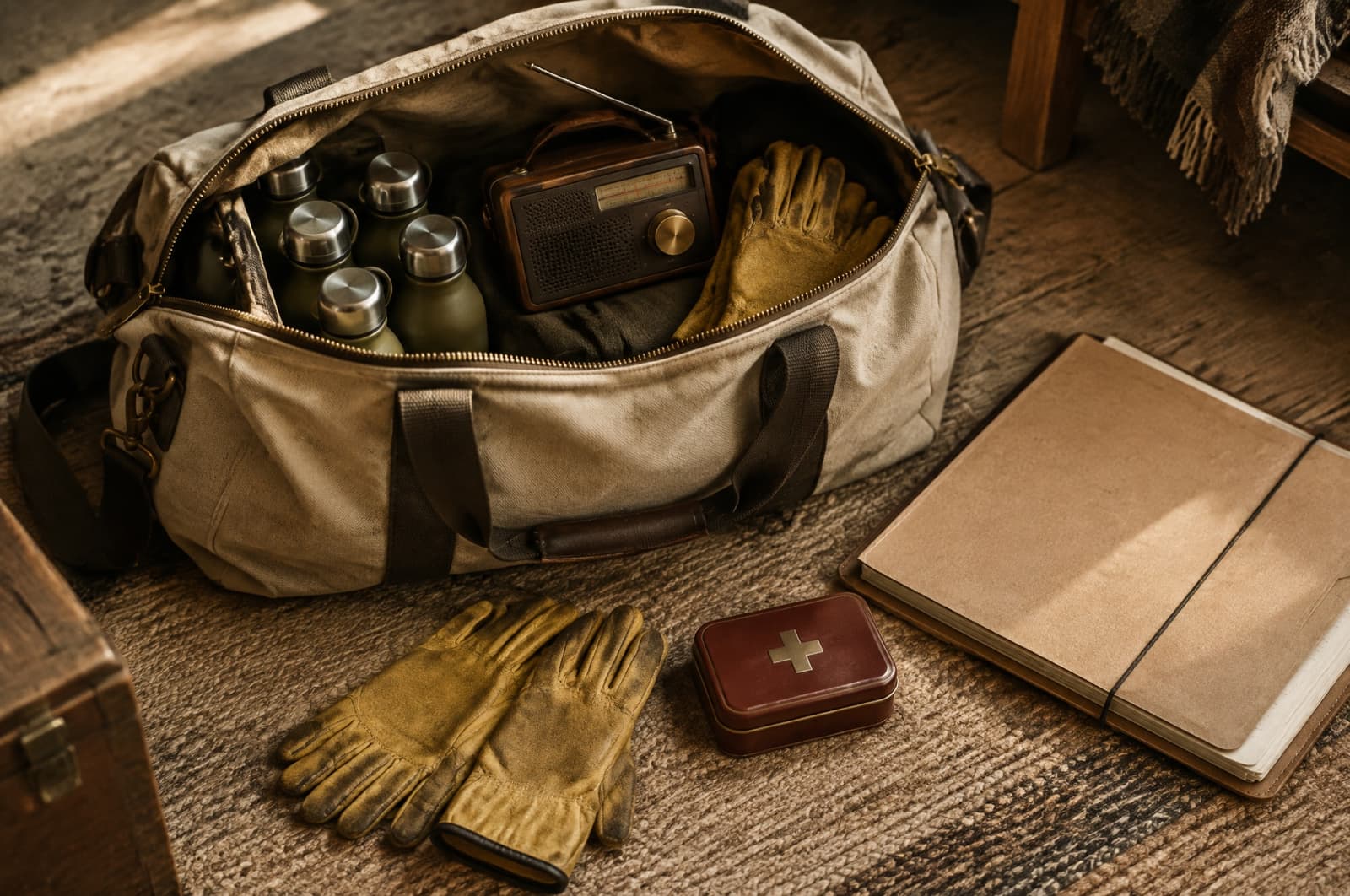
- Three days of water, a week of medication with a written dose list, cash in small bills, a charged power bank and cable, a battery or crank radio, sturdy shoes and work gloves, a first aid kit, and copies of your key documents on a USB drive.
- Why do documents matter so much in an emergency?
- Because they determine how quickly you can access aid, file an insurance claim and prove residency for rehousing. Households that lose identification, leases and policies often spend months simply regaining the ability to ask for help.
- Why pick an out-of-state emergency contact?
- Local phone lines jam during a local emergency while long-distance calls often still connect. Having everyone check in with one out-of-state person creates a switchboard so family members can find each other.
- Should I call or text during an emergency?
- Text. Text messages get through congested networks when voice calls fail, and they keep trying to send in the background.