§ WELLNESS · 3 MIN READ
The Fourth Trimester Needs a Village
New research asked Black mothers what actually helped them after the baby came. The answers were not complicated. They were just not being offered.

By Culture
THE SHORT VERSION
Mental health conditions are among the leading causes of maternal death in the United States, and Black mothers die from pregnancy-related causes at roughly three times the rate of white mothers, about 50 deaths per 100,000 births. Federal reviews find four out of five of those deaths were preventable. The National Maternal Mental Health Hotline, 1-833-852-6262, answers free, twenty four hours a day, in English and Spanish.
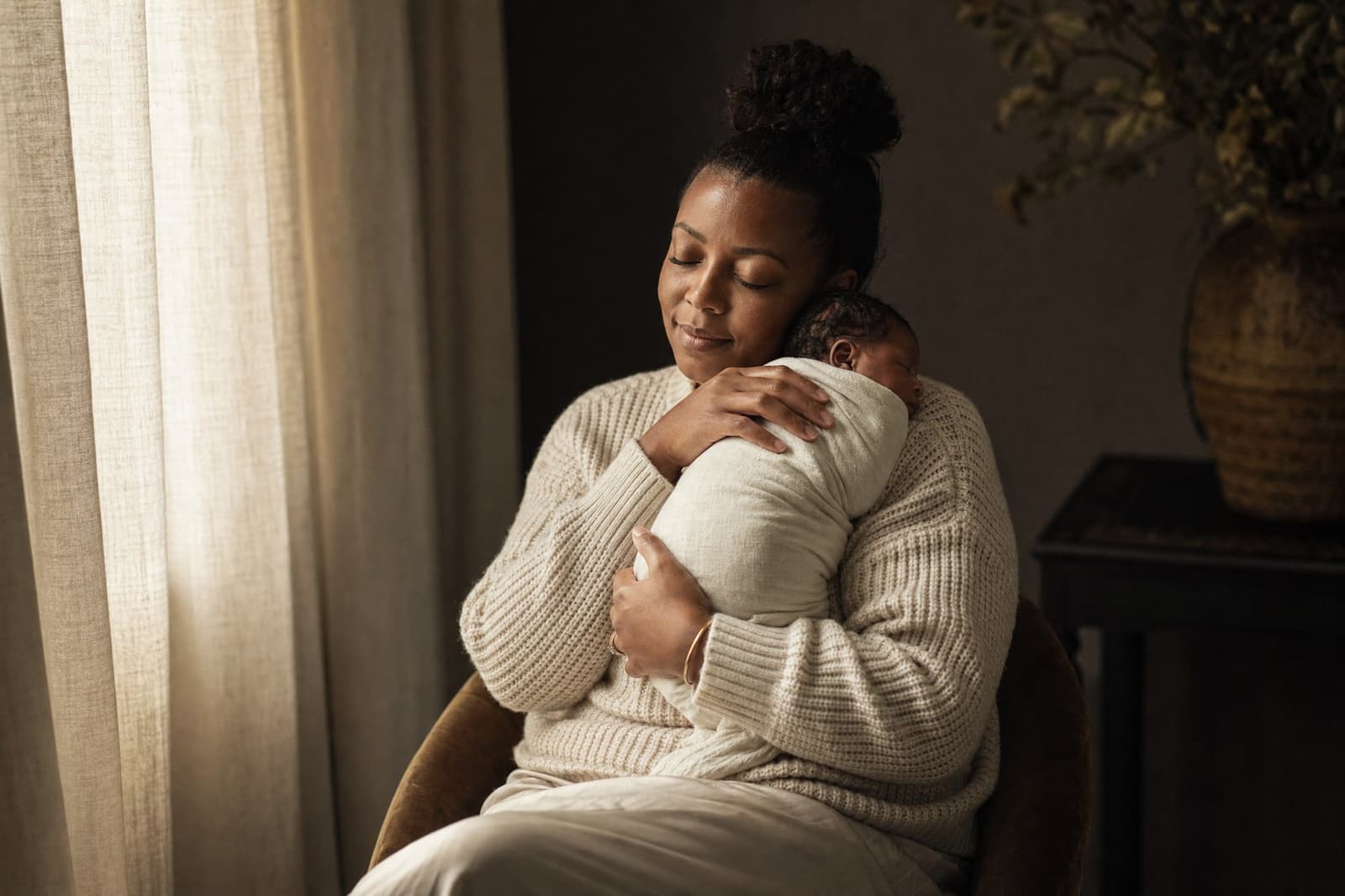
There is a name for the months after a baby is born, when the body is still healing and the mind is running on no sleep and everybody has stopped asking how the mother is doing. Doctors call it the fourth trimester. Our grandmothers called it the time the village shows up. For too many Black mothers, nobody shows up, and the numbers say what that costs.
The Numbers Nobody Says Out Loud
Mental health conditions are one of the leading causes of maternal death in the United States. Not bleeding. Not blood pressure. Depression, anxiety, and the crises that grow from them when no one is watching. Black mothers die from pregnancy-related causes at roughly three times the rate of white mothers, about 50 deaths for every 100,000 births in the most recent federal count. And the government's own reviews say four out of five of those deaths could have been prevented.
Prevented means somebody could have asked the right question at the right time. This year a group of researchers asked the mothers themselves what that question would have been.
What the Mothers Said
The study, published in the journal Healthcare, sat down for long interviews with twelve Black mothers between the ages of 20 and 39 in a Midwestern city. Half were single. Most worked full-time. Half had graduate degrees. These were not women who lacked resources. They lacked the right ones.
Three things came through.
“They did not ask for a miracle. They asked to be believed the first time.”
The Village, Right Now
If you are in the fourth trimester, or you love someone who is, here is what exists today, free.
If You Are the Village
The question is not how is the baby. The question is how are you, really, and then you stay on the porch long enough to hear the answer.
Then do one specific thing rather than offering to help. Bring a meal you do not stay for. Take the 4 a.m. shift once. Hold the baby while she showers without being asked twice. And go with her to the appointment if she is scared of being dismissed, because a second person in the room is the most reliable way a dismissal gets caught.
A mother who is running on empty is not a different problem from a woman who cannot stop saying yes. Put the Oxygen Mask on You First is a therapist making the same argument at length, and it is worth sending to somebody today. Find or start the group if the village does not exist yet. Somebody has to be the first one on the porch.
- What is the fourth trimester?
- The fourth trimester is the months after a baby is born, when the mother's body is still healing and the emotional load is heaviest. It is when postpartum depression and anxiety most often appear, and when attention tends to shift entirely to the baby.
- Why do Black mothers die at higher rates after childbirth?
- Black mothers die from pregnancy-related causes at roughly three times the rate of white mothers, about 50 deaths per 100,000 births in the most recent federal count. Mental health conditions are among the leading causes, and federal reviews find four out of five of these deaths were preventable.
- What number do I call for postpartum depression help?
- The National Maternal Mental Health Hotline is 1-833-852-6262, also written 1-833-TLC-MAMA, free and answered twenty four hours a day in English and Spanish. Postpartum Support International is 1-800-944-4773, and in a crisis, call or text 988.
- Are there support groups for Black mothers after birth?
- Yes. Postpartum Support International, 1-800-944-4773, runs free online support groups, including groups just for Black mothers. Black Mamas Matter Alliance and the Shades of Blue Project can point you to a Black doula or therapist near you.
- What did the 2026 study of Black mothers find?
- The 2026 study in the journal Healthcare interviewed twelve Black mothers aged 20 to 39 and found they build support in layers: prayer and journaling, family and friends, church and work, and formal care, all at once. Who helped mattered as much as what they did.
- What did Black mothers say they actually wanted from providers?
- The Black mothers in the study wanted providers who shared their culture and, where possible, their race, who listened, did not rush, and were easy to reach. They also asked for cultural humility training, peer groups for Black mothers, and a real way to report being dismissed.
- How can I support a new mother?
- Ask how the new mother is, not how the baby is, and wait for the real answer. Then do one specific thing: bring a meal you do not stay for, take a night shift, or hold the baby while she showers. Going with her to an appointment is the most reliable way a dismissal gets caught.