§ ENTERTAINMENT · 3 MIN READ
The Audition Moved Into Your Living Room
Casting rarely puts you in a room first anymore. What used to be a performance is now a file, and the file is judged on things nobody warns you about.

By Culture
THE SHORT VERSION
Self-tape auditions have replaced in-person first reads across most of the industry, which means a performance is now evaluated as a video file. Sound quality, framing, a plain background and correct file naming determine whether the performance is watched at all, and a workable setup can be assembled for under one hundred dollars using a phone, a window and a clip light.
The first read is a file now. Not a room, not a handshake, a file in a folder with two hundred other files, opened by somebody who is thirty seconds into deciding.
This is not a complaint. It is a description, and it changes what you should practise.
Sound before picture. A tape that looks slightly soft and sounds clean gets watched. A tape that looks beautiful and sounds like a bathroom does not. Rooms with hard walls and no soft surfaces are the enemy. Put a blanket on the bed, close the window, turn off the fridge if you can hear it.
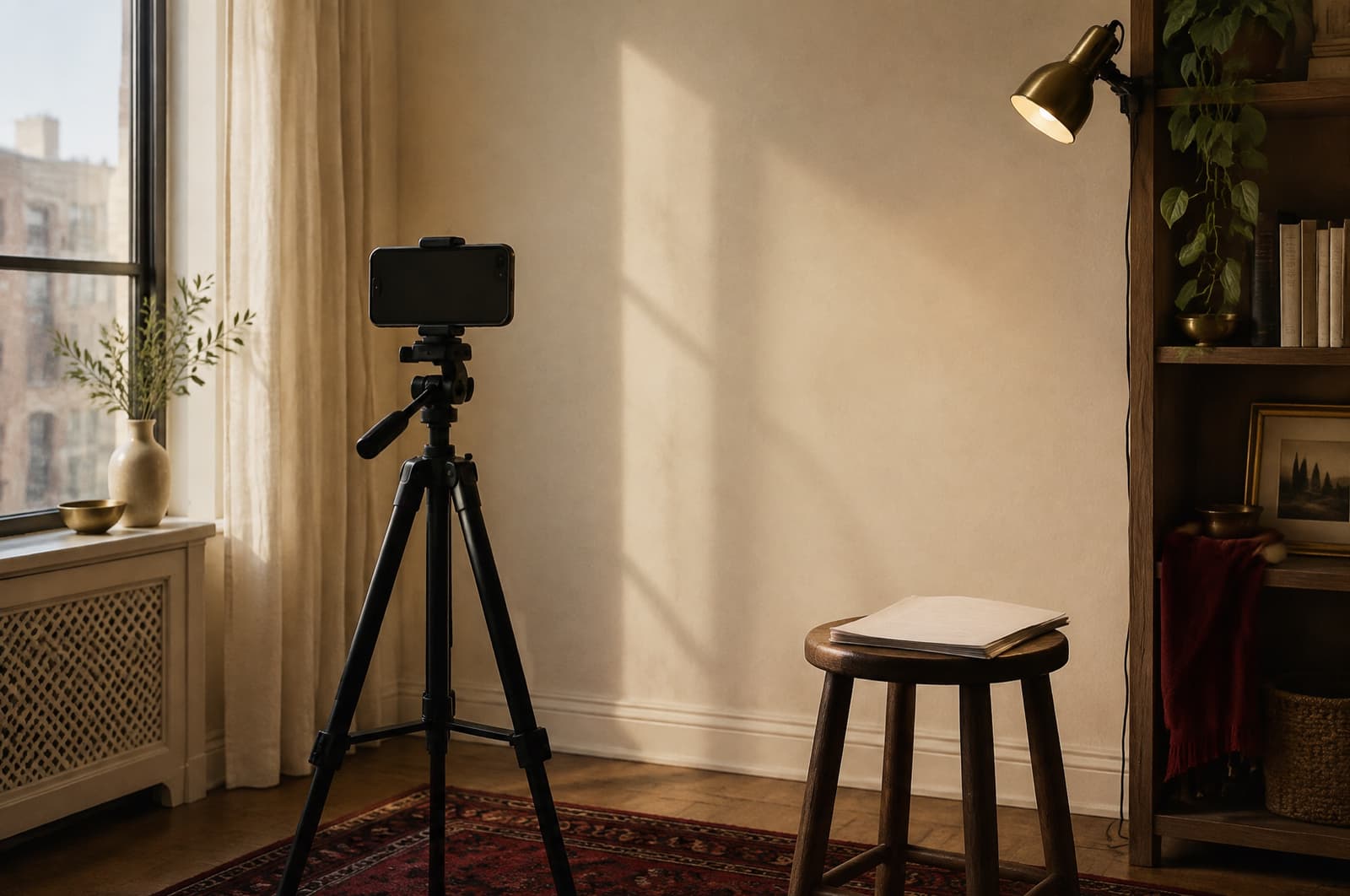
A background that is doing nothing. Plain wall, solid colour, nothing hanging, nothing bright. Anything behind you is competing with your face.
Framing at the chest. Head and shoulders, small amount of room above the head, eyeline just beside the lens rather than into it. Horizontal unless they asked for vertical.
The slate they asked for. Some want name and height and location, some want name only, some want it at the end. Do what the instruction says rather than what you were taught in a class five years ago.
Whoever reads the other lines can sink the tape. Flat is fine. Loud is not, slow is not, and funny is definitely not.
Keep the reader quieter than you in the mix and slightly off mic. Casting needs to hear you.
This sounds like nothing. It is not nothing.
Casting is sorting hundreds of files by hand. A file named final2.mov goes into a void that nobody deliberately created. Use exactly the convention in the request, usually your name, the role, and the project.
“The performance is what you are judged on. The file is what decides whether you are judged.”
A phone from the last several years shoots better than the professional cameras that first-billed actors were auditioning on a decade ago. That is genuinely true and it is the good news.
Add a window at midday with you facing it, a cheap clip light to fill the shadow side, a phone tripod, and an inexpensive wired lavalier. That is the whole kit. Everything else is optional for a long time.
Tapes are watched fast, and a lot of what you were taught to do in a room reads as too much on camera. Smaller, closer, more still.
And the turnaround will be short, so build the setup once and leave it standing in a corner. The actors booking work are not the ones with the best cameras. They are the ones who can turn a clean tape around by tomorrow without a production of their own.
Watch it once with the sound off, to see what your face is doing. Watch it once with the picture off, to hear what the room sounds like.
Then check the contract you will be asked to sign if it goes well, because the AI clause in it now matters more than the fee.
And if the goal is your own work rather than somebody else's, there are more doors into a union card than the one you were told about.
- What is the most common self-tape mistake?
- Bad sound. A tape with soft picture and clean audio gets watched through, while a sharp-looking tape recorded in a hard, echoing room gets closed early. Fix the room before you upgrade the camera.
- How should a self-tape be framed?
- Head and shoulders to roughly mid-chest, a small amount of headroom, eyeline just beside the lens rather than into it, plain background, horizontal unless the request says otherwise.
- What equipment do I actually need?
- A recent phone, a window for light, a cheap clip light to fill the shadow side, a phone tripod and an inexpensive wired lavalier microphone. That covers it for under one hundred dollars.